Stuart ADU Rules: Size, Setbacks and Permits
Stuart ADU rules determine whether an accessory dwelling is allowed and which size, setback and permit requirements apply. Review the city rules below, then check your property.
The quick answer
Stuart ADU rules at a glance
- Owner-occupancy
Not required — you can rent both units - Short-term rentals
Allowed with local licensing — verify with the city - Where it's allowed
Eligibility varies by zoning district — check your address to confirm yours
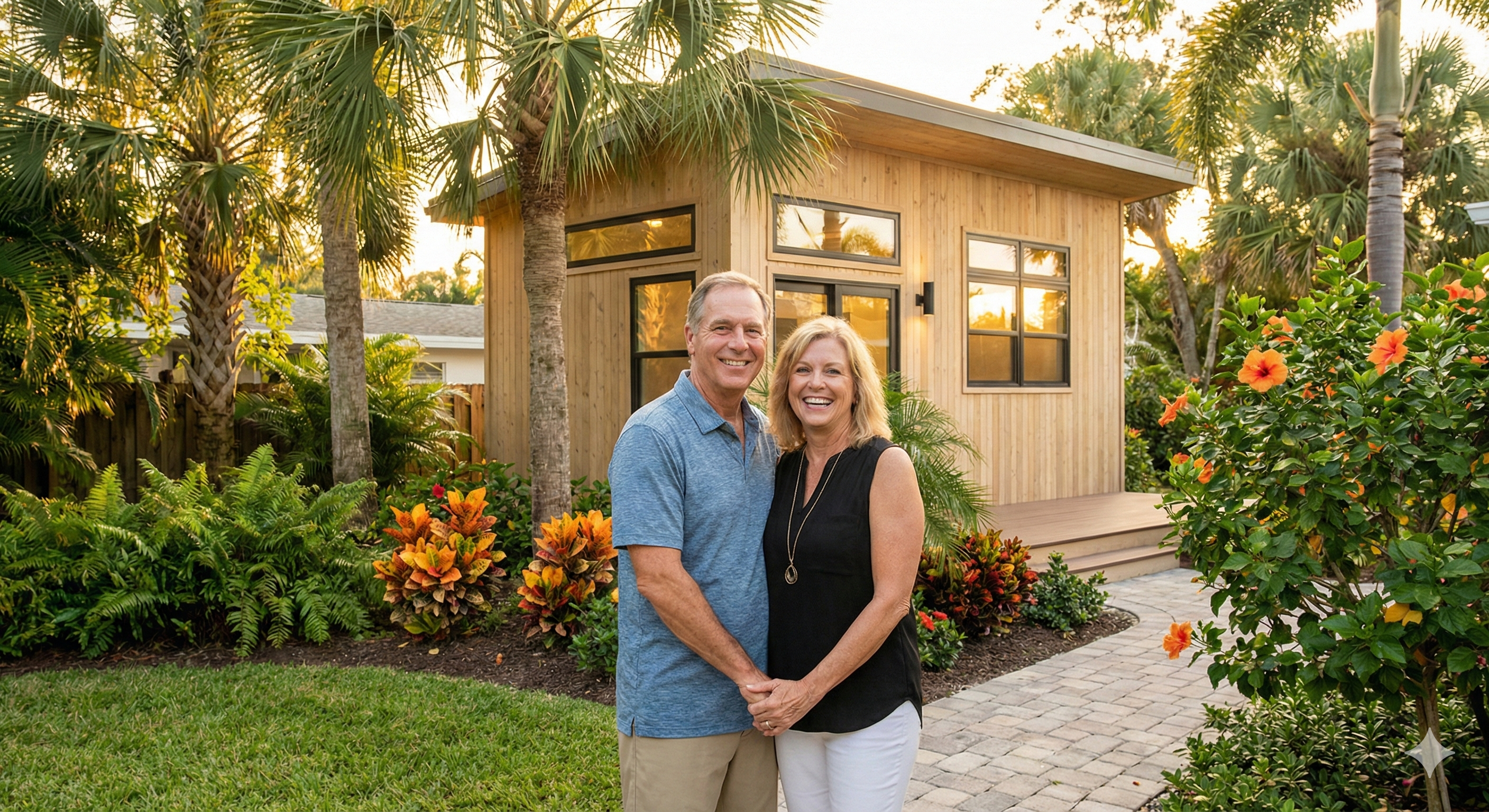
ADU Rules in Stuart, Florida
We've researched Stuart's ADU rules so you don't have to. Here's what matters most — the facts that determine whether your project is possible, and how much it will cost.
- ADU size limits are set by local zoning — confirm the maximum with the city
- Martin County has a history of growth-management restrictions — verify current ADU rules with Martin County
- No owner-occupancy requirement — strong seasonal rental market (October–April Treasure Coast season)
- Sewalls Point and Rocky Point are separate municipalities with stricter rules — confirm your jurisdiction
- Waterfront parcels on the St. Lucie River have SFWMD setback requirements that reduce buildable area
- LTR income $1,100–$2,000/month; seasonal STR $90–$250/night
Last verified: 2026-04-02
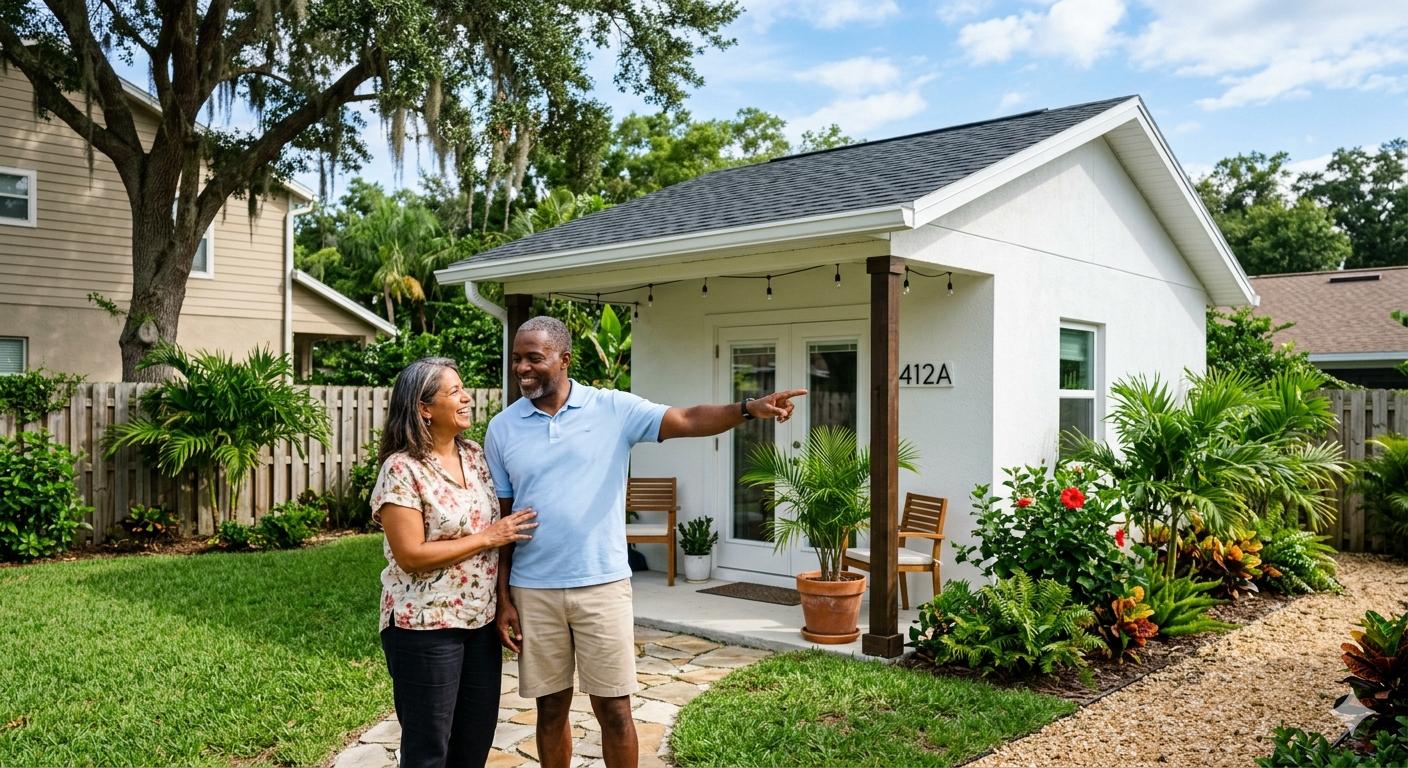
Backyard ADUs like this are being built across Stuart — here's how to do it right.
What Stuart's zoning may allow for an ADU
Stuart ADU rules are governed by local zoning. Small waterfront city known as the Sailfish Capital of the World. Martin County connector recently fixed (FDOR upgrade). Treasure Coast location with strong seasonal rental market.
Zoning allowance
ADUs may be permitted on eligible single-family parcels, subject to local zoning approval — confirm with the city. Stuart is an incorporated city within Martin County; the City of Stuart Planning Department and Martin County Building Department both serve the area.
Size limits
ADU size limits are set by local zoning — confirm the maximum with the city.
Lot + setbacks
Typical setbacks: 5–7ft side, 10ft rear in R-1/R-2 zones. Waterfront parcels on the St. Lucie River and Indian River Lagoon have riparian setbacks and SFWMD buffer requirements.
Height + coverage
Maximum 30ft in residential zones. Waterfront height may be limited further by Martin County regulations.
Parking
One parking space required for ADU. Street parking is limited in downtown Stuart residential areas.
Rental / occupancy
Owner-occupancy requirements are set by local zoning — confirm with the city. STR permitted; Martin County requires STR registration and collects Tourist Development Tax.
Permit process
City of Stuart Community Development for city parcels. Martin County Growth Management Department for unincorporated county parcels. Both require Florida-licensed plans.
Building limits and rental rules, side by side
These figures are based on the best available data for Stuart and should be confirmed with the city's planning department before you commit to a design or a rental strategy — local ordinances change and vary by parcel.
Building Limits
- Max Size:See requirements above
- Setbacks:6ft side / 10ft rear
- Detached Allowed?Yes
- Max Height:30 ft
- Build Cost Est.:$105,000–$210,000
Rental Rules
No Owner-Occupancy Requirement: Both units can be rented to tenants simultaneously.
Short-Term Rentals: Not prohibited at the city level. State DBPR license required.
Estimated Monthly Income
$1,100–$2,000/month
Based on 2025–2026 Stuart market data
ADUs are NOT Permitted In:
- Sewalls Point (separate municipality) — verify independently
- Rocky Point (separate municipality) — verify independently
- Jensen Beach (unincorporated Martin County, near Stuart) — county regulations apply
- FEMA AE flood zone properties along the St. Lucie River — elevation requirements apply
- Commercial zones in downtown Stuart — not eligible for residential ADUs
Here's exactly what you'll pay — and how to avoid the fees that catch most homeowners off guard
Most homeowners spend 3–4 weeks piecing this together on their own. We've mapped the full Stuart permit process step by step — so you know exactly what's coming, and what to prepare.
Step 1: Pre-Application Zoning Check
- Where:
- City of Stuart Community Development, 100 SE Osceola Street, Stuart, FL 34994
- Contact:
- (772) 288-5315
- What to bring:
- Property address and parcel ID, preliminary site sketch, lot survey
- Timeline:
- No appointment fee — call ahead to confirm office hours
- Cost:
- No fee for initial inquiry
Step 2: Submit Permit Application
- Where:
- https://www.ci.stuart.fl.us/271/Building-Division
- Contact:
- (772) 288-5315
- What to bring:
- Architectural plans, site plan, boundary survey, energy compliance docs
- Timeline:
- 5–8 weeks plan review; 7–12 weeks total
- Cost:
- $6,500–$14,700 in permits and fees (excluding construction)
Step 3: Plan Review & Revisions
- Where:
- City of Stuart Community Development
- Contact:
- (772) 288-5315
- What to bring:
- Responses to any correction letters; revised drawings if required
- Timeline:
- 5–8 weeks plan review; 7–12 weeks total
- Cost:
- No additional fee for standard resubmittal
Step 4: Construction & Inspections
- Where:
- Stuart Building Department
- Contact:
- (772) 288-5315
- What to bring:
- Approved permit set must be on-site at all times during construction
- Timeline:
- Schedule inspections as each phase of work is completed
- Cost:
- Included in permit fee
Full Stuart Permit Cost Breakdown
These are the fees you'll encounter, in the order you'll typically encounter them.
| Cost Item | Amount / Notes |
|---|---|
| Total Estimated Cost | $6,500–$14,700 in permits and fees (excluding construction) |
| Building Permit Fee | $1,400–$3,000 |
| Impact Fees | $3,500–$8,000 |
| Plan Review Fee | $400–$900 |
| Utility Connection Fees | $1,200–$2,800 |
Key ADU Restrictions in Stuart
These are the rules that most often catch homeowners by surprise. Read them carefully before engaging an architect.
- Sewalls Point and Rocky Point are separate municipalities within Martin County with their own stricter regulations — verify jurisdiction before planning
- St. Lucie River and Indian River Lagoon waterfront properties have South Florida Water Management District (SFWMD) setback requirements from the mean high water line
- Martin County has historically been growth-management conscious — the county has sued the state to preserve local control; verify current ADU rules with Martin County
Common Mistakes to Avoid in Stuart
- Martin County is one of the few Florida counties that has actively litigated to limit development — their Comprehensive Plan is more restrictive than most; verify your specific parcel's designation carefully
- Downtown Stuart's oldest residential neighborhoods have narrow lots (40–60ft wide) — measure buildable envelope before commissioning plans
- The Intracoastal Waterway corridor has significant boat traffic and noise; STR guests often have strong preferences for waterfront vs. inland — price accordingly
Eligible Zones in Stuart
ADUs may be permitted in these zoning districts, but eligibility depends on your specific parcel and the current local ordinance. Confirm your parcel and rules with Stuart Planning before relying on this — most homeowners can check their zone at the county GIS portal in a few minutes.
Stuart neighborhoods where ADU permits are being filed — is your street next?
Stuart ADU — Frequently Asked Questions
These are the questions we hear most often from Stuart homeowners. If yours isn't here, our ADU Zoning Experts can answer it directly.
What makes Stuart a good ADU market despite its small size?
Stuart punches above its weight as a rental market. As the county seat of Martin County (162,000 residents), it serves as a commercial hub for a large, affluent suburban population. The Sailfish Capital branding attracts sport fishing tourism November through April. Proximity to the Palm Beach metro (40 miles south) creates overflow demand. Many Stuart ADU landlords target professionals and retirees who want a small-city coastal lifestyle without Palm Beach prices — annual leases run $1,100–$2,000/month.
What is the SFWMD setback requirement for waterfront properties?
The South Florida Water Management District (SFWMD) regulates construction near wetlands, waterways, and flood-prone areas throughout South Florida. Properties adjacent to the St. Lucie River, Indian River Lagoon, or navigable canals typically require a 25–50 ft setback from the mean high water line for any new structure. This SFWMD setback is in addition to local zoning setbacks. Get a wetland delineation and SFWMD pre-application consultation before designing an ADU on any waterfront parcel.
Stuart Planning Department
We recommend calling City of Stuart Community Development at (772) 288-5315 before submitting anything — a 10-minute conversation can save weeks of back-and-forth on your permit application.
City of Stuart Community Development
Nearby Cities — ADU Rules
Get your free Stuart ADU Guide
Your personal zoning report + complete Stuart ADU requirements — delivered free to your email in 60 seconds.
No spam. Unsubscribe anytime. Used by 10,000+ Florida homeowners.
Serving homeowners in 34994, 34996, 34997 and surrounding Stuart zip codes.
This page provides general information based on current ordinances and publicly available data as of April 2026. Zoning rules change — verify all requirements with your local planning department before making financial commitments.