St Augustine ADU Rules: Size, Setbacks and Permits
St Augustine ADU rules depend on the jurisdiction governing your property. Review the city requirements below; a St Augustine mailing address may instead fall under unincorporated St Johns County rules.
The quick answer
St Augustine ADU rules at a glance
- Owner-occupancy
Not required — you can rent both units - Short-term rentals
Allowed with local licensing — verify with the city - Where it's allowed
Eligibility varies by zoning district — check your address to confirm yours
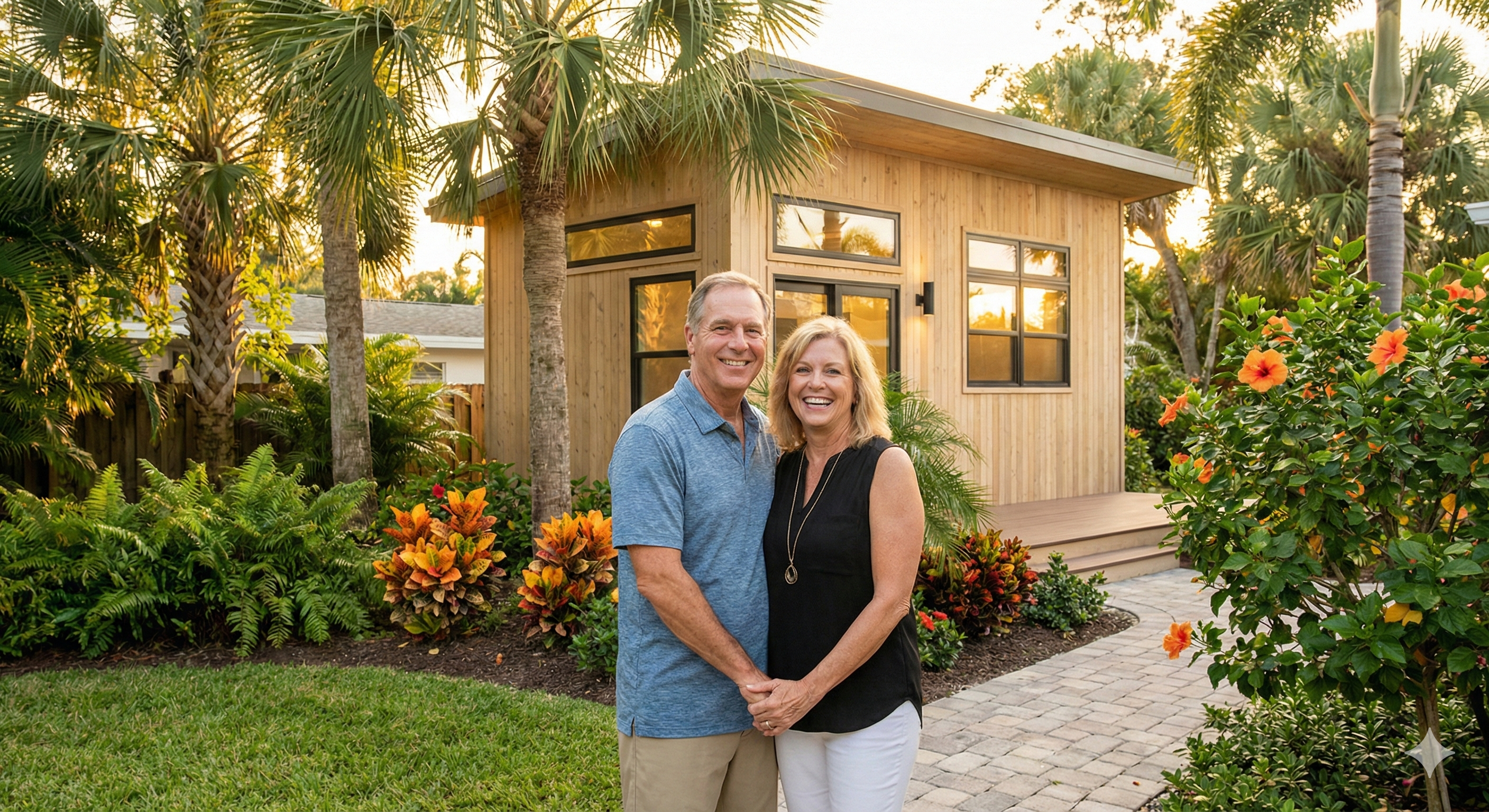
ADU Rules in St Augustine, Florida
We've researched St Augustine's ADU rules so you don't have to. Here's what matters most — the facts that determine whether your project is possible, and how much it will cost.
- ADU size limits are set by local zoning — confirm the maximum with the city
- Historic district (Old Town) requires HARB review — plan for 4–12 additional weeks and an architect experienced in historic preservation
- No owner-occupancy requirement — strong STR market driven by 5+ million annual visitors to America's oldest city
- St. Augustine Beach is a separate city with its own rules — confirm your exact jurisdiction
- Anastasia Island parcels may be in FEMA AE flood zones — elevation requirements add cost and time
- Strong year-round tourism creates one of Florida's most reliable STR markets; LTR $1,300–$2,400/month; STR $120–$320/night
Last verified: 2026-04-02
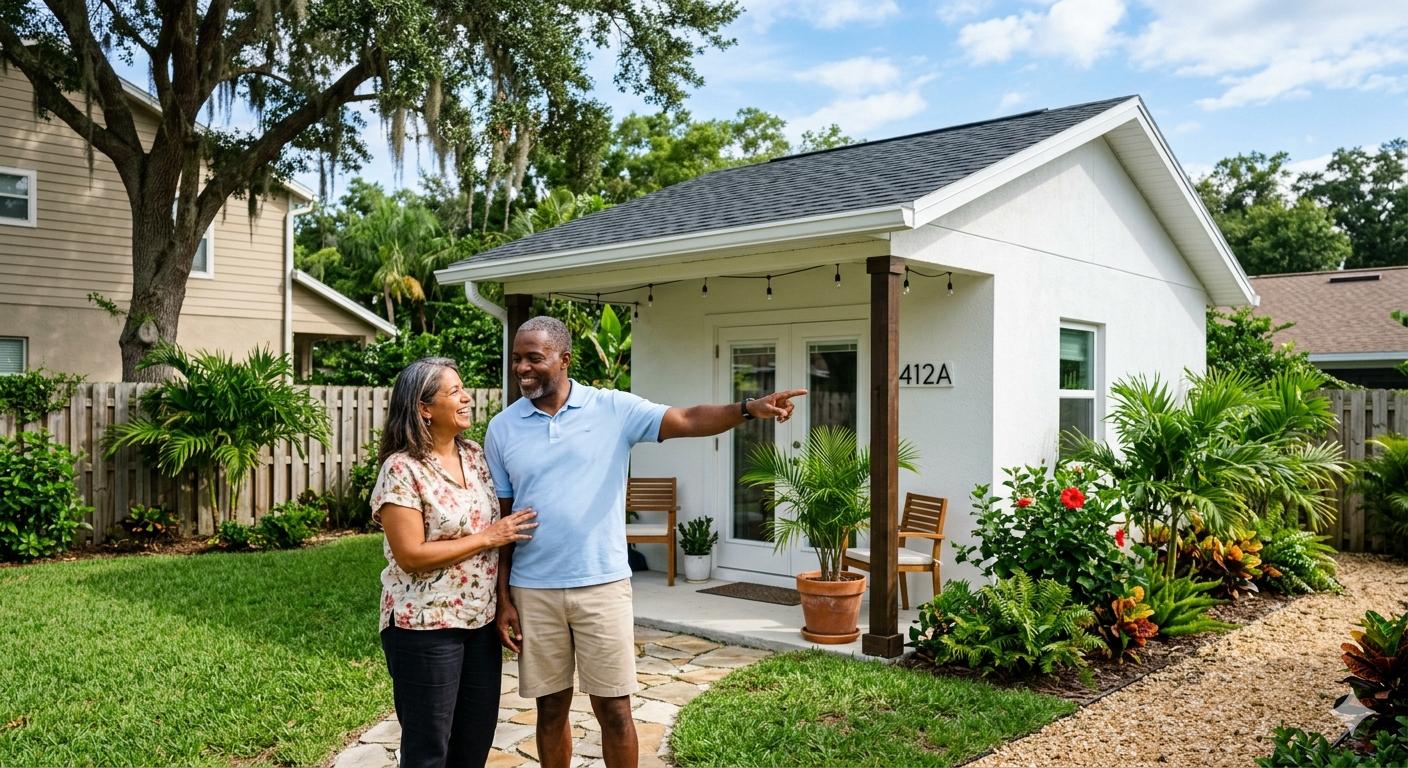
Backyard ADUs like this are being built across St Augustine — here's how to do it right.
What St Augustine's zoning may allow for an ADU
St. Augustine ADU rules are governed by local zoning. America's oldest city with active historic preservation overlay. Historic district properties require HARB review. St. Johns County connector active.
Zoning allowance
ADUs may be permitted on eligible single-family parcels, subject to local zoning approval — confirm with the city. Properties within St. Augustine's National Historic Landmark District require design review by the Historic Architectural Review Board (HARB) before permits are issued.
Size limits
ADU size limits are set by local zoning — confirm the maximum with the city.
Lot + setbacks
Typical setbacks: 5ft side, 10ft rear in standard residential zones. Historic district setbacks vary by block — verify with St. Augustine Planning. Many older lots are irregular in shape.
Height + coverage
Maximum 25–35ft in residential zones. Historic district properties: height and massing must be compatible with adjacent contributing structures.
Parking
One parking space required for ADU. Historic district properties often have limited driveway access — confirm parking compliance before design.
Rental / occupancy
Owner-occupancy requirements are set by local zoning — confirm with the city. STR widely practiced; St. Augustine city requires STR license and St. Johns County collects 6% Tourist Development Tax.
Permit process
St. Augustine Building Department for city parcels. Historic district parcels also require HARB Certificate of Appropriateness before building permit can be issued. St. Johns County Building for unincorporated county parcels.
Building limits and rental rules, side by side
These figures are based on the best available data for St Augustine and should be confirmed with the city's planning department before you commit to a design or a rental strategy — local ordinances change and vary by parcel.
Building Limits
- Max Size:See requirements above
- Setbacks:5ft side / 10ft rear
- Detached Allowed?Yes
- Max Height:35 ft
- Build Cost Est.:$100,000–$210,000
Rental Rules
No Owner-Occupancy Requirement: Both units can be rented to tenants simultaneously.
Short-Term Rentals: Not prohibited at the city level. State DBPR license required.
Estimated Monthly Income
$1,300–$2,400/month
Based on 2025–2026 St Augustine market data
ADUs are NOT Permitted In:
- Properties within the National Historic Landmark District — ADUs permitted but require HARB Certificate of Appropriateness
- St. Augustine Beach (separate municipality) — has its own ADU rules; verify independently
- Commercial zones in downtown core (King Street, St. George Street) — not eligible for new residential ADUs
- FEMA Zone VE coastal properties on Anastasia Island facing the Atlantic — highly restrictive
Here's exactly what you'll pay — and how to avoid the fees that catch most homeowners off guard
Most homeowners spend 3–4 weeks piecing this together on their own. We've mapped the full St Augustine permit process step by step — so you know exactly what's coming, and what to prepare.
Step 1: Pre-Application Zoning Check
- Where:
- St. Augustine Planning and Building Department, 75 King Street, St. Augustine, FL 32084
- Contact:
- (904) 825-1065
- What to bring:
- Property address and parcel ID, preliminary site sketch, lot survey
- Timeline:
- No appointment fee — call ahead to confirm office hours
- Cost:
- No fee for initial inquiry
Step 2: Submit Permit Application
- Where:
- https://www.citystaug.com/government/departments-offices/building/building-permits
- Contact:
- (904) 825-1065
- What to bring:
- Architectural plans, site plan, boundary survey, energy compliance docs
- Timeline:
- Standard residential zones: 4–7 weeks
- Cost:
- $7,300–$17,000 in permits and fees (excluding construction); add HARB costs for historic district
Step 3: Plan Review & Revisions
- Where:
- St. Augustine Planning and Building Department
- Contact:
- (904) 825-1065
- What to bring:
- Responses to any correction letters; revised drawings if required
- Timeline:
- Standard residential zones: 4–7 weeks. Historic district: add 4–12 weeks for HARB review. Anastasia Island flood zone: add 2–4 weeks for elevation review.
- Cost:
- No additional fee for standard resubmittal
Step 4: Construction & Inspections
- Where:
- St Augustine Building Department
- Contact:
- (904) 825-1065
- What to bring:
- Approved permit set must be on-site at all times during construction
- Timeline:
- Schedule inspections as each phase of work is completed
- Cost:
- Included in permit fee
Full St Augustine Permit Cost Breakdown
These are the fees you'll encounter, in the order you'll typically encounter them.
| Cost Item | Amount / Notes |
|---|---|
| Total Estimated Cost | $7,300–$17,000 in permits and fees (excluding construction); add HARB costs for historic district |
| Building Permit Fee | $1,500–$3,500 |
| harb review fee | $200–$600 (historic district only) |
| Impact Fees | $4,000–$9,000 |
| Plan Review Fee | $400–$900 |
| Utility Connection Fees | $1,200–$3,000 |
Key ADU Restrictions in St Augustine
These are the rules that most often catch homeowners by surprise. Read them carefully before engaging an architect.
- National Historic Landmark District (Old Town) requires HARB Certificate of Appropriateness — adds 4–12 weeks to the permit timeline and requires architectural compatibility review
- Many St. Augustine lots are irregular or unusually shaped due to the city's 450-year-old colonial street grid — a site survey is essential before design
- Anastasia Island parcels are subject to flood zone requirements and CCCL restrictions for ocean-facing lots
Common Mistakes to Avoid in St Augustine
- HARB review is not a rubber stamp — the board can require design modifications or deny a Certificate of Appropriateness if the proposed ADU is not architecturally compatible with the historic context
- Many downtown St. Augustine properties are in high water table zones — slab-on-grade construction may require special foundations even outside FEMA flood zones
- St. Augustine Beach is a separate municipality from St. Augustine — it has its own building department and ADU regulations; confirm your jurisdiction
Eligible Zones in St Augustine
ADUs may be permitted in these zoning districts, but eligibility depends on your specific parcel and the current local ordinance. Confirm your parcel and rules with St Augustine Planning before relying on this — most homeowners can check their zone at the county GIS portal in a few minutes.
St Augustine neighborhoods where ADU permits are being filed — is your street next?
St Augustine ADU — Frequently Asked Questions
These are the questions we hear most often from St Augustine homeowners. If yours isn't here, our ADU Zoning Experts can answer it directly.
Does the historic district mean I can't build an ADU in St. Augustine?
No — ADUs are permitted in historic district neighborhoods, but the Historic Architectural Review Board (HARB) must issue a Certificate of Appropriateness before you can pull a building permit. HARB reviews design compatibility, materials, massing, and visibility from the public right-of-way. ADUs sited in rear yards with appropriate materials and compatible design typically receive approval. Work with an architect who has prior HARB experience to avoid costly redesigns.
Why is St. Augustine such a strong STR market for ADU income?
St. Augustine draws 5–7 million annual visitors as America's oldest city. Year-round tourism is driven by history (Castillo de San Marcos, Flagler College, St. George Street), the beaches of Anastasia Island, and events including Nights of Lights (November–January). Weekly STR rates for a well-appointed ADU near Old Town run $800–$2,000+. Even suburban locations a mile from downtown see strong occupancy from overflow tourism demand.
What is the difference between St. Augustine, St. Augustine Beach, and St. Johns County?
These are three separate jurisdictions. The City of St. Augustine covers the historic core and most inland neighborhoods. St. Augustine Beach is a separate incorporated city on Anastasia Island with its own building department and ADU rules. St. Johns County covers unincorporated areas (including much of Anastasia Island and all areas east and west of the city limits). Use the St. Johns County Property Appraiser website to identify your jurisdiction before contacting the wrong department.
Are there flood zone issues for St. Augustine ADUs?
Yes — St. Augustine has significant flood risk, particularly in the downtown core (King Street area), Anastasia Island, and low-lying areas near the Matanzas River. A 2016 flood event caused widespread damage in areas that had never flooded before. Get an elevation certificate before designing your ADU. FEMA AE zone properties must meet Base Flood Elevation requirements. Anastasia Island ocean-facing lots may be in Zone VE, which is highly restrictive for new construction.
St Augustine Planning Department
We recommend calling St. Augustine Planning and Building Department at (904) 825-1065 before submitting anything — a 10-minute conversation can save weeks of back-and-forth on your permit application.
St. Augustine Planning and Building Department
Nearby Cities — ADU Rules
Get your free St Augustine ADU Guide
Your personal zoning report + complete St Augustine ADU requirements — delivered free to your email in 60 seconds.
No spam. Unsubscribe anytime. Used by 10,000+ Florida homeowners.
Serving homeowners in 32084, 32086, 32080 and surrounding St Augustine zip codes.
This page provides general information based on current ordinances and publicly available data as of April 2026. Zoning rules change — verify all requirements with your local planning department before making financial commitments.