What ADU can you build in your Melbourne backyard?
Instant zoning report — see exactly what your zoning allows: permitted ADU types, size limits, setbacks, and lot requirements for your specific property.
The quick answer
Melbourne ADU rules at a glance
- Max ADU size
Up to 600 sq ft, and smaller than your main home - Owner-occupancy
Not required — you can rent both units - Short-term rentals
Allowed with local licensing — verify with the city - Where it's allowed
Eligibility varies by zoning district — check your address to confirm yours
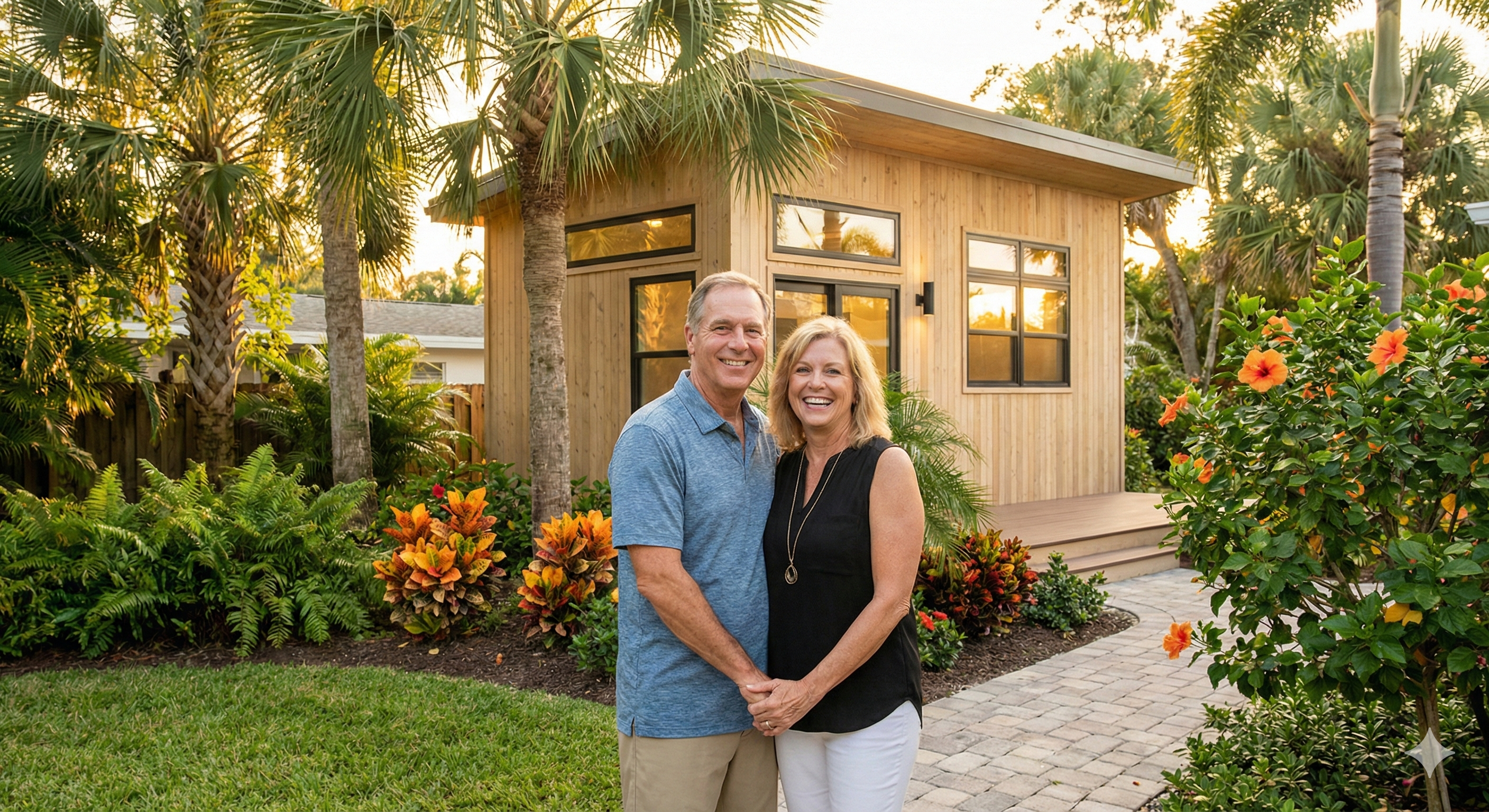
ADU Rules in Melbourne, Florida
We've researched Melbourne's ADU rules so you don't have to. Here's what matters most — the facts that determine whether your project is possible, and how much it will cost.
- By-right ADU, one per lot — 600 sq ft on lots under 1 acre (Zoning App. B §1(A))
- Corrects a blanket 1,000 sq ft figure (that applies only to non-residential lots)
- No owner-occupancy requirement; ≤2 stories / 24 ft
Last verified: 2026-07-15
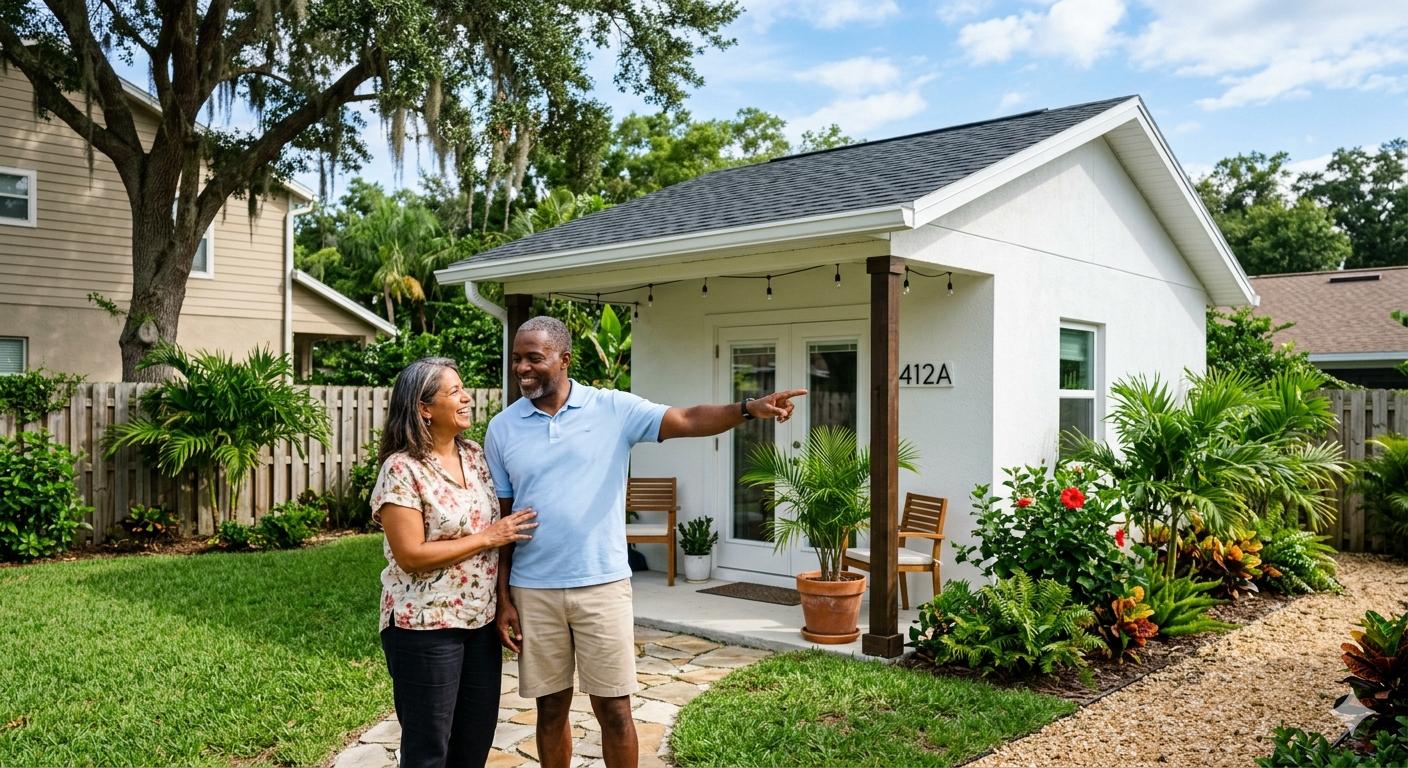
Backyard ADUs like this are being built across Melbourne — here's how to do it right.
What Melbourne's zoning may allow for an ADU
Melbourne allows a by-right ADU (one per lot) accessory to a single-family home. For the typical residential lot under one acre the cap is 600 sq ft; larger lots may go to 50% of the home or 2,000 sq ft. There is no owner-occupancy requirement. (This corrects a blanket 1,000 sq ft figure, which applies only to non-residential properties.)
Zoning allowance
An ADU is permitted by-right, one per lot, accessory to a single-family home in Melbourne's R-A, R-1 (AAA/AA/A/B), R-2, R-3, REU, R-P, C-1A and C-1 districts and the Eau Gallie Art overlay (Zoning App. B, Art. VI §1(A)).
Size limits
For residential lots under one acre, a Melbourne ADU may not exceed 600 sq ft; on lots one acre or larger it may be up to 50% of the principal structure or 2,000 sq ft, whichever is less. (The 1,000 sq ft figure applies only to non-residential properties.) Height is capped at 2 stories / 24 ft; mini
Lot + setbacks
Setbacks, lot coverage, and minimum lot size for an accessory dwelling vary by zoning district. Confirm the exact figures with the jurisdiction's planning department (see the verified size and district notes above).
Height + coverage
Height and lot-coverage limits vary by zoning district. Confirm current limits with local planning.
Parking
Parking requirements for an accessory dwelling vary by district; typically one additional space. Confirm with local planning.
Rental / occupancy
Melbourne's ADU standards impose no owner-occupancy requirement (the term appears only in the non-binding purpose clause) and are silent on renting — these are full dwelling units, not guest-house-only. Confirm rental/short-term treatment with the city.
Permit process
An accessory dwelling is permitted through the jurisdiction's standard building-permit / zoning-review process. Contact the local planning or building department for current requirements.
Building limits and rental rules, side by side
These figures are based on the best available data for Melbourne and should be confirmed with the city's planning department before you commit to a design or a rental strategy — local ordinances change and vary by parcel.
Building Limits
- Max Size:600 sq ft
- Detached Allowed?Check with city
- Max Height:24 ft
Rental Rules
Short-term rental rules vary — confirm with Melbourne Planning.
Here's exactly what you'll pay — and how to avoid the fees that catch most homeowners off guard
Most homeowners spend 3–4 weeks piecing this together on their own. We've mapped the full Melbourne permit process step by step — so you know exactly what's coming, and what to prepare.
Step 1: Pre-Application Zoning Check
- Where:
- Melbourne Planning Department
- What to bring:
- Property address and parcel ID, preliminary site sketch, lot survey
- Timeline:
- No appointment fee — call ahead to confirm office hours
- Cost:
- No fee for initial inquiry
Step 2: Submit Permit Application
- Where:
- Melbourne Planning Department — contact for portal link
- What to bring:
- Architectural plans, site plan, boundary survey, energy compliance docs
- Timeline:
- Contact planning to confirm current review timelines
- Cost:
- Contact planning for current fee schedule
Step 3: Plan Review & Revisions
- Where:
- Melbourne Planning Department
- What to bring:
- Responses to any correction letters; revised drawings if required
- Timeline:
- Plan for one or more review cycles — timeline varies by submission completeness
- Cost:
- No additional fee for standard resubmittal
Step 4: Construction & Inspections
- Where:
- Melbourne Building Department
- What to bring:
- Approved permit set must be on-site at all times during construction
- Timeline:
- Schedule inspections as each phase of work is completed
- Cost:
- Included in permit fee
Eligible Zones in Melbourne
ADUs may be permitted in these zoning districts, but eligibility depends on your specific parcel and the current local ordinance. Confirm your parcel and rules with Melbourne Planning before relying on this — most homeowners can check their zone at the county GIS portal in a few minutes.
Melbourne neighborhoods where ADU permits are being filed — is your street next?
Melbourne ADU — Frequently Asked Questions
These are the questions we hear most often from Melbourne homeowners. If yours isn't here, our ADU Zoning Experts can answer it directly.
Can I build an ADU in Melbourne, Florida?
An ADU is permitted by-right, one per lot, accessory to a single-family home in Melbourne's R-A, R-1 (AAA/AA/A/B), R-2, R-3, REU, R-P, C-1A and C-1 districts and the Eau Gallie Art overlay (Zoning App. B, Art. VI §1(A)).
What is the maximum ADU size in Melbourne?
For residential lots under one acre, a Melbourne ADU may not exceed 600 sq ft; on lots one acre or larger it may be up to 50% of the principal structure or 2,000 sq ft, whichever is less. (The 1,000 sq ft figure applies only to non-residential properties.) Height is capped at 2 stories / 24 ft; minimum lot area 14,520 sq ft (Zoning App. B, Art. VI §1(A)).
Do I need to be an owner-occupant to build an ADU in Melbourne?
Melbourne's ADU standards impose no owner-occupancy requirement (the term appears only in the non-binding purpose clause) and are silent on renting — these are full dwelling units, not guest-house-only. Confirm rental/short-term treatment with the city.
Can I use my Melbourne ADU as an Airbnb?
Contact Melbourne Planning to confirm current short-term rental rules for ADUs.
How do I get an ADU permit in Melbourne?
An accessory dwelling is permitted through the jurisdiction's standard building-permit / zoning-review process. Contact the local planning or building department for current requirements.
Nearby Cities — ADU Rules
Get your free Melbourne ADU Guide
Your personal zoning report + complete Melbourne ADU requirements — delivered free to your email in 60 seconds.
No spam. Unsubscribe anytime. Used by 10,000+ Florida homeowners.
More Brevard County ADU Guides
Looking for ADU Builders in Melbourne?
How to choose a builder, what they won't tell you, and real cost breakdowns.
Serving homeowners in 32901, 32903, 32904, 32935, 32940 and surrounding Melbourne zip codes.
This page provides general information based on current ordinances and publicly available data as of 2026-07-15. Zoning rules change — verify all requirements with your local planning department before making financial commitments.