What ADU can you build in your Miami backyard?
Instant zoning report — see exactly what your zoning allows: permitted ADU types, size limits, setbacks, and lot requirements for your specific property.
The quick answer
Miami ADU rules at a glance
- Owner-occupancy
Not required — you can rent both units - Short-term rentals
Allowed with local licensing — verify with the city - Where it's allowed
Eligibility varies by zoning district — check your address to confirm yours
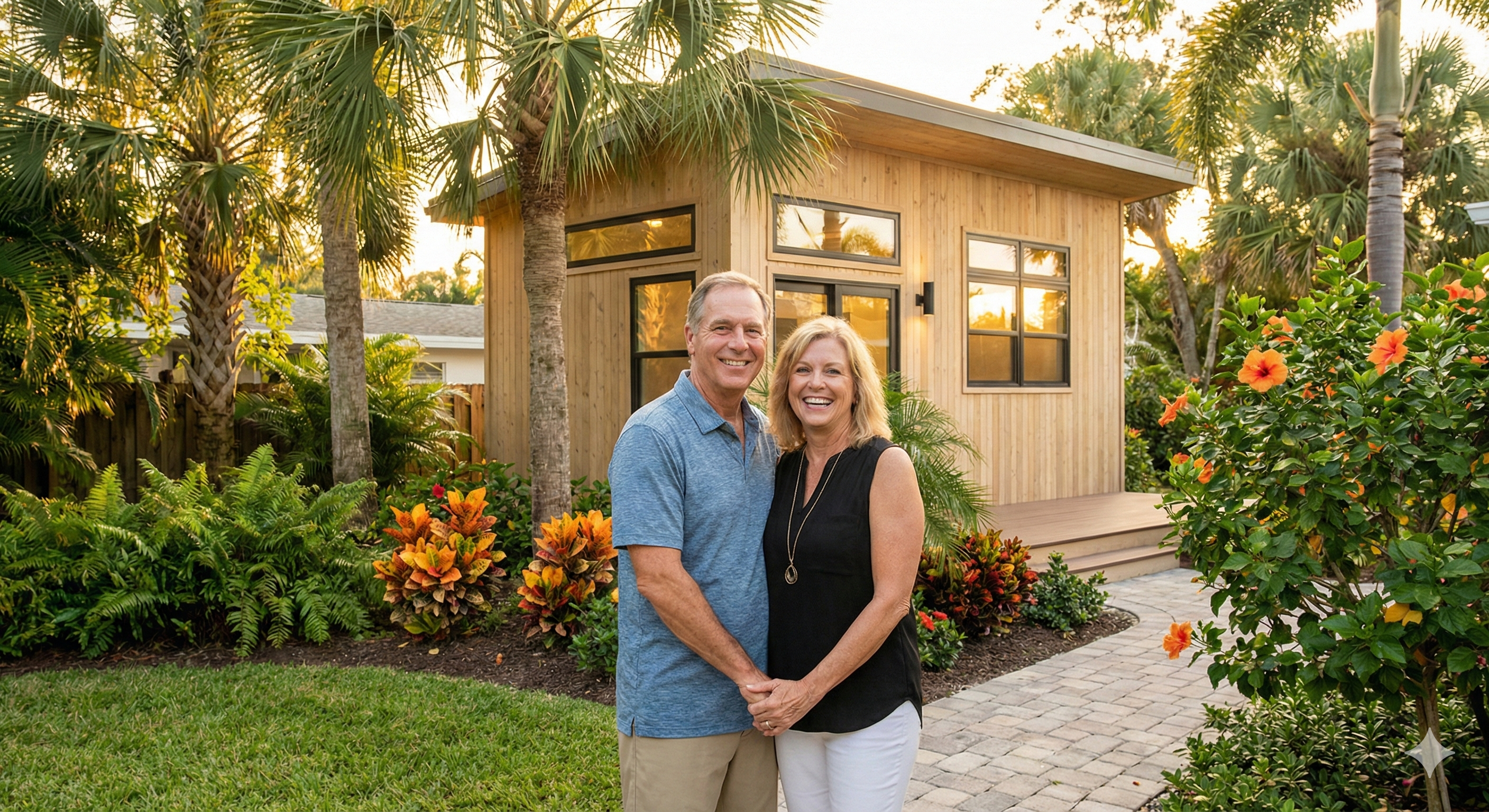
ADU Rules in Miami, Florida
We've researched Miami's ADU rules so you don't have to. Here's what matters most — the facts that determine whether your project is possible, and how much it will cost.
- No owner-occupancy requirement under local zoning rules — but Miami has historically imposed local rental and occupancy restrictions; verify current status
- Miami-Dade County HVHZ applies throughout — impact-resistant construction mandatory, adds 20–30% over inland Florida costs
- Miami has a unique Miami 21 zoning code — residential T3 zones (T3-L, T3-R, T3-O) are eligible for ADUs; confirm your transect zone
- Short-term rentals are heavily regulated by Miami — Miami Beach STR rules are separate and more restrictive
- Many Miami neighborhoods have deed restrictions (older covenants, historic designations) that restrict rental uses
- Construction $160,000–$350,000 (HVHZ + Miami labor premium); rental income $1,800–$3,500/month — highest range in Florida
Last verified: 2026-03-14
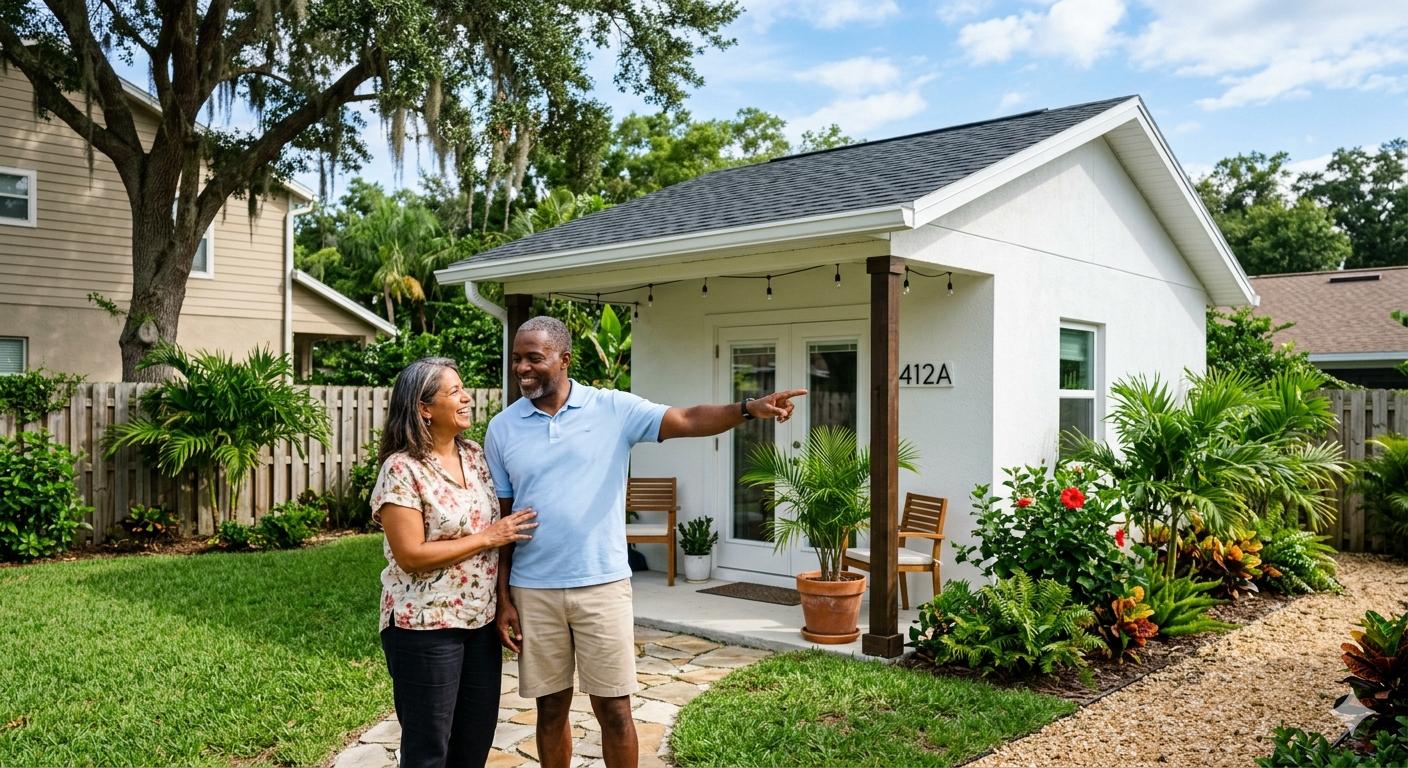
Backyard ADUs like this are being built across Miami — here's how to do it right.
What Miami's zoning may allow for an ADU
Best-available AI-generated operating guidance; verify with planning department before final permit decisions.
Zoning allowance
Miami-Dade guidance indicates ADUs are allowed in single-family zoned districts as attached, detached, or conversion units, with district-specific constraints.
Size limits
ADU size limits are set by local zoning — confirm the maximum with the city.
Lot + setbacks
RU-1 references include minimum lot area context (7,500 sq ft) and district-specific setback handling.
Height + coverage
Coverage and dimensional controls vary by district and should be confirmed in applicable code sections.
Parking
Parking is treated as a compatibility factor in ADU legislation context and should be confirmed by district requirements.
Rental / occupancy
ADU definitions allow separate occupancy/use contexts, but project-level use conditions should be confirmed with planning.
Permit process
Confirm district eligibility with planning, then validate dimensions/parking and submit permit package.
Building limits and rental rules, side by side
These figures are based on the best available data for Miami and should be confirmed with the city's planning department before you commit to a design or a rental strategy — local ordinances change and vary by parcel.
Building Limits
- Max Size:See requirements above
- Setbacks:5ft side / 10ft rear
- Detached Allowed?Yes
- Max Height:25 ft
- Build Cost Est.:$130,000–$280,000
Rental Rules
No Owner-Occupancy Requirement: Both units can be rented to tenants simultaneously.
Short-Term Rentals: Not prohibited at the city level. State DBPR license required.
Estimated Monthly Income
$1,800–$3,200/month
Based on 2025–2026 Miami market data
ADUs are NOT Permitted In:
- T4, T5, T6 transect zones (multi-family, commercial, urban core) — residential single-family ADU rules apply to T3 zones only
- Coconut Grove Historic District, Little Havana historic zones — additional Historic Preservation review required
- Properties in Homestead Air Force Base influence zone — height and use restrictions apply
Here's exactly what you'll pay — and how to avoid the fees that catch most homeowners off guard
Most homeowners spend 3–4 weeks piecing this together on their own. We've mapped the full Miami permit process step by step — so you know exactly what's coming, and what to prepare.
Step 1: Pre-Application Zoning Check
- Where:
- City of Miami Building Department, 444 SW 2nd Ave., 4th Floor, Miami, FL 33130
- Contact:
- (305) 416-1100
- What to bring:
- Property address and parcel ID, preliminary site sketch, lot survey
- Timeline:
- No appointment fee — call ahead to confirm office hours
- Cost:
- No fee for initial inquiry
Step 2: Submit Permit Application
- Where:
- https://www.miamigov.com/Services/Building-Permitting
- Contact:
- (305) 416-1100
- What to bring:
- Architectural plans, site plan, boundary survey, energy compliance docs
- Timeline:
- Miami 21 zoning review: 4–8 weeks
- Cost:
- $13,000–$26,500 in permits and fees (excluding construction)
Step 3: Plan Review & Revisions
- Where:
- City of Miami Building Department
- Contact:
- (305) 416-1100
- What to bring:
- Responses to any correction letters; revised drawings if required
- Timeline:
- Miami 21 zoning review: 4–8 weeks. Building permit review: 5–8 weeks. Inspections: 10–14 weeks. Total: 6–10 months.
- Cost:
- No additional fee for standard resubmittal
Step 4: Construction & Inspections
- Where:
- Miami Building Department
- Contact:
- (305) 416-1100
- What to bring:
- Approved permit set must be on-site at all times during construction
- Timeline:
- Schedule inspections as each phase of work is completed
- Cost:
- Included in permit fee
Full Miami Permit Cost Breakdown
These are the fees you'll encounter, in the order you'll typically encounter them.
| Cost Item | Amount / Notes |
|---|---|
| Total Estimated Cost | $13,000–$26,500 in permits and fees (excluding construction) |
| Building Permit Fee | $3,500–$7,000 (Miami Building Department) |
| impact fees miami dade | $6,000–$12,000 |
| Plan Review Fee | $1,000–$2,500 (Miami 21 zoning review) |
| Utility Connection Fees | $2,500–$5,000 (Miami-Dade Water & Sewer) |
Key ADU Restrictions in Miami
These are the rules that most often catch homeowners by surprise. Read them carefully before engaging an architect.
- Miami 21 zoning code governs ADUs — only T3-O, T4, T5, and T6 transect zones permit accessory residential units; T3-R and T3-L (most single-family areas) typically do not
- STR license required from City of Miami — cap-limited by neighborhood with waitlists in popular areas
- Miami-Dade HVHZ construction standards apply — adds 20–30% to construction costs vs. non-coastal Florida
Common Mistakes to Avoid in Miami
- Assuming your T3 zone allows ADUs — T3-R and T3-L (restricted and limited) frequently do not; only T3-O (open) permits accessory residential
- STR license waitlists exist in Wynwood, Brickell-adjacent, and Little Havana areas — confirm availability before building for Airbnb income
- Miami-Dade property tax assessments increase significantly after ADU improvements — plan for higher annual taxes
Eligible Zones in Miami
ADUs may be permitted in these zoning districts, but eligibility depends on your specific parcel and the current local ordinance. Confirm your parcel and rules with Miami Planning before relying on this — most homeowners can check their zone at the county GIS portal in a few minutes.
Miami neighborhoods where ADU permits are being filed — is your street next?
Miami ADU — Frequently Asked Questions
These are the questions we hear most often from Miami homeowners. If yours isn't here, our ADU Zoning Experts can answer it directly.
What is Miami 21 and how does it affect my ADU eligibility?
Miami 21 is Miami's form-based zoning code that classifies all properties on a 'transect' scale from T1 (Natural) to T6 (Urban Core). Single-family ADUs are applicable in T3 zones (sub-transects T3-L, T3-R, T3-O). T4 and above are multi-family/commercial zones. Look up your parcel's transect at Miami's GIS portal or call Planning at (305) 416-1400 before designing.
How much does HVHZ add to ADU construction costs in Miami?
Miami-Dade County HVHZ requirements add approximately 20–30% over inland Florida ADU costs. This includes impact-rated windows ($300–$600/window), enhanced roof deck attachment (ring-shank nails, 8d spacing), hurricane straps at every rafter, and continuous load path requirements. A 600 sq ft ADU that might cost $120,000 inland costs $150,000–$180,000 in Miami. Budget accordingly.
Can I build an ADU in Miami's historic neighborhoods like Little Havana or Coconut Grove?
Yes, but with additional review requirements. Properties in Miami's designated historic districts require Historic Preservation review in addition to standard building permits. This can add 4–8 weeks to the approval process and may restrict exterior design elements. The City of Miami Historic Preservation Office (305-416-1408) can tell you if your property is in a historic district.
Are short-term rentals allowed with a Miami ADU?
City of Miami permits STRs with a Certificate of Use (COU) and registration. Miami has specific STR regulations including a $750+ annual fee, inspection requirements, and community meeting notification for some zones. Note that Miami Beach (a separate city) has much stricter STR restrictions — if your property is in Miami Beach, see the Miami Beach section. Miami's STR market is strong year-round given international tourism.
What is the realistic all-in cost for a Miami ADU project?
Budget $160,000–$350,000 for construction plus $13,000–$26,500 in permits and fees, plus $15,000–$40,000 for architectural/engineering drawings required for HVHZ compliance. All-in for a 600–1,000 sq ft detached ADU in Miami: $188,000–$416,500. Rental income of $1,800–$3,500/month creates a reasonable long-term ROI given Miami's rental demand, but this is a significant capital investment.
Miami Planning Department
We recommend calling City of Miami Building Department at (305) 416-1100 before submitting anything — a 10-minute conversation can save weeks of back-and-forth on your permit application.
City of Miami Building Department
Nearby Cities — ADU Rules
Get your free Miami ADU Guide
Your personal zoning report + complete Miami ADU requirements — delivered free to your email in 60 seconds.
No spam. Unsubscribe anytime. Used by 10,000+ Florida homeowners.
More Miami-Dade County ADU Guides
Looking for ADU Builders in Miami?
How to choose a builder, what they won't tell you, and real cost breakdowns.
Related Guide: How to Build an ADU in Miami
Five jurisdictions, HVHZ rules, Certificate of Use, real costs ($180K–$350K), and ROI analysis.
Serving homeowners in 33101, 33125, 33126, 33127, 33128, 33129, 33130, 33131, 33132, 33133, 33134, 33135, 33136, 33137, 33138, 33139, 33140, 33141, 33142, 33143, 33144, 33145, 33146, 33147, 33150, 33155, 33157, 33160 and surrounding Miami zip codes.
This page provides general information based on current ordinances and publicly available data as of March 2026. Zoning rules change — verify all requirements with your local planning department before making financial commitments.