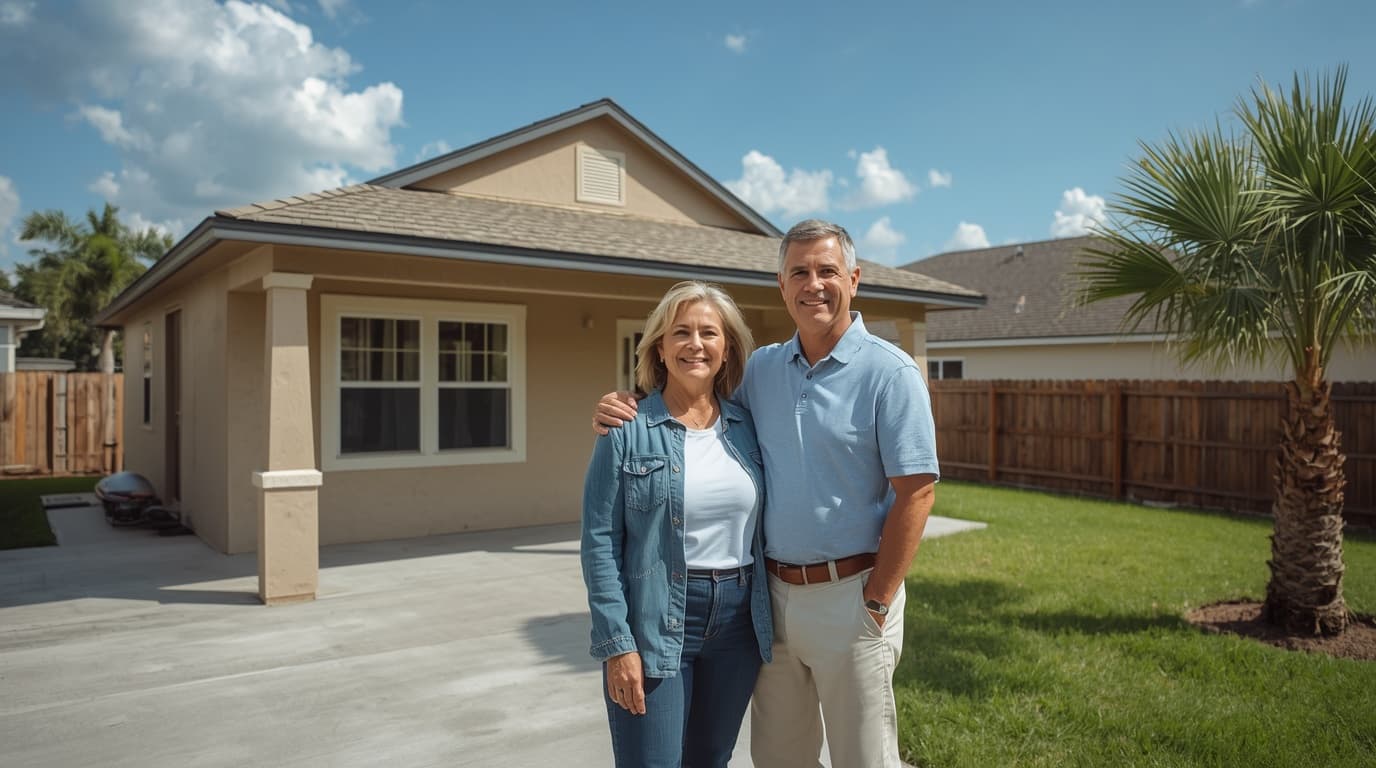
Orlando ADU Rules 2026
Zoning, Permits & Costs
Can you build an ADU in Orlando? Depends on your zoning. Here's the full picture: City of Orlando vs Orange County rules, permit steps, all-in costs, and ROI.
The quick answer
Orlando ADU rules at a glance
- Max ADU size
Up to 1,000 sq ft, and smaller than your main home - Owner-occupancy
Not required — you can rent both units - Short-term rentals
Restricted — long-term (30+ day) rentals only - Where it's allowed
Most residential districts (R-1, R-1A, R-2A…), plus City of Orlando vs. unincorporated Orange differ — check your address
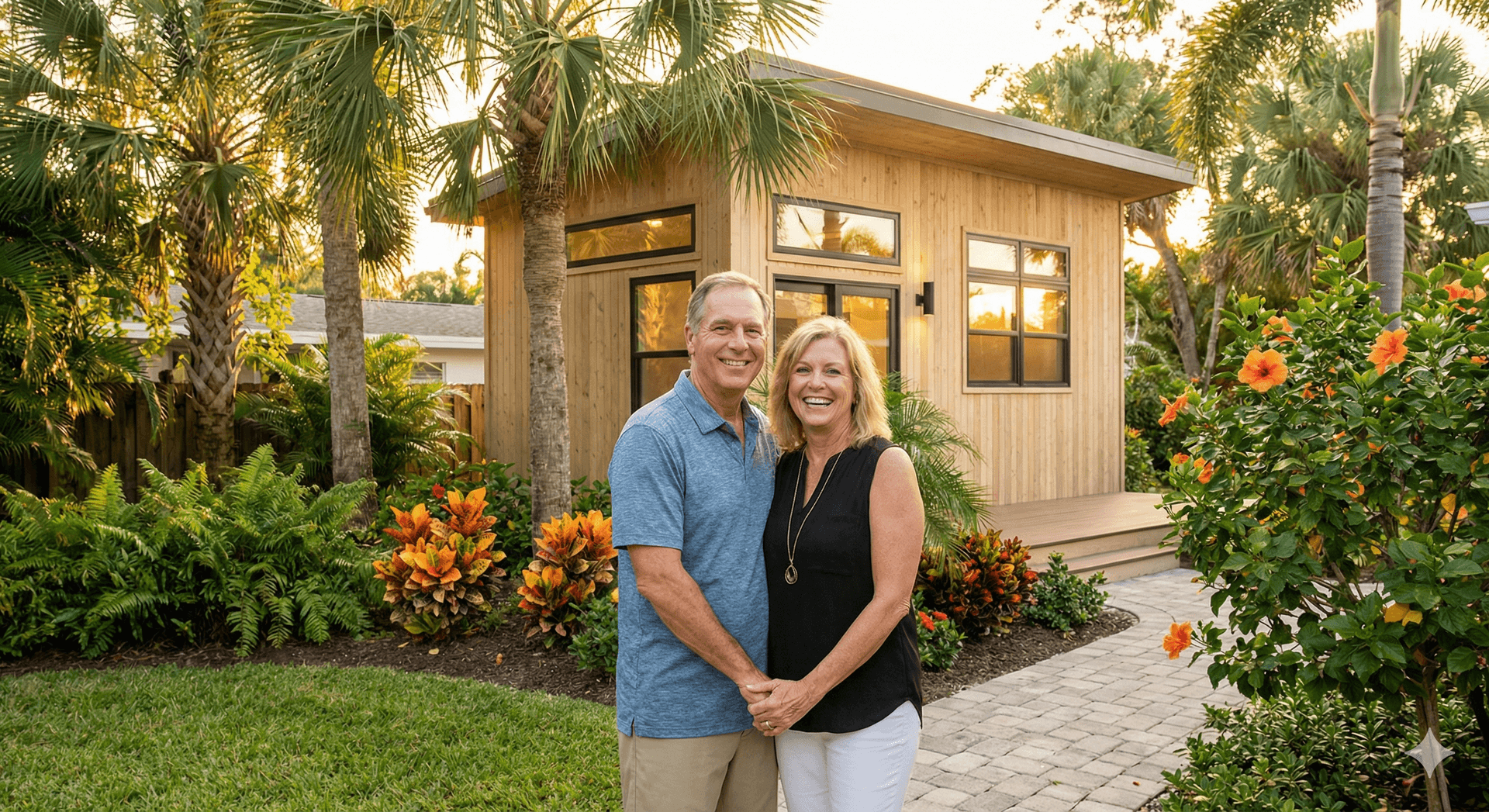
Orlando's housing market is booming, and backyard ADUs — accessory dwelling units — are one of the smartest ways to add value to your property, generate rental income, or house family members without selling or moving.
An ADU (also called a granny flat, backyard cottage, casita, or in-law suite) is a secondary self-contained dwelling on the same lot as your primary home. In Orlando and Orange County, recent changes to Florida ADU laws have made ADUs easier to permit than ever before — but there are still important zoning rules, design standards, and code requirements you need to understand before breaking ground.
This guide covers everything: Orlando ADU rules, what you can build, how much it costs, the full permitting process step by step, your financing options, how to choose between a general contractor, a dedicated ADU builder in Orlando like Goshen Tiny Homes or a prefab unit — and the ROI you can expect.
Let's start with the most important question: can you build on your property?
Free · Takes 2 Minutes
Find Out What You Can Build — Free Zoning Check
Enter your address and we'll tell you your zoning district, whether ADUs are permitted, and what size and type you can build. No cost, no commitment.
Check My PropertySection 1
Orlando ADU Laws & Zoning — What You Need to Know in 2026
ADU rules in the Greater Orlando area depend on whether you're inside the City of Orlando limits or in unincorporated Orange County. They are not the same — and getting this wrong costs homeowners thousands.
Florida State Law: The 2026 Backdrop
Florida has considered legislation to expand ADUs statewide, but those bills — SB 184 (2025) and SB 48 (2026) — did not pass and are not law. Under Florida Statute §163.31771, local governments may adopt ordinances permitting ADUs; they are not required to, and there is no universal statewide right. Whether ADUs are permitted by right in Orlando is set by the city's own ordinance. See our full breakdown of Florida ADU laws for the statewide picture.
✅ 2026 Opportunity
Florida's legislative direction is clearly pro-ADU. Even if you were turned down or found the process too complex in prior years, the regulatory landscape in 2026 is more favorable than it has ever been.
City of Orlando ADU Rules
ADUs are permitted in all residential zoning districts in the City of Orlando (R-1A, R-1, R-1AA, R-2A, R-2, R-3, and others), as well as MXD, O-1, and O-2 districts. For a quick reference of all rules, see our Orlando ADU rules page. Key rules include:
- One ADU per lot. No ADUs are permitted on duplex or tandem lots.
- Size limits. Generally 500 sq. ft. up to 1,000 sq. ft. depending on your lot size. ADUs in Orlando historic districts are capped at 700 sq. ft.
- Placement. ADUs must be located to the side or rear of the primary structure. Front-yard placement is not permitted.
- Design standards. The ADU's exterior design must be compatible with the main home in materials, color, and roof pitch.
- Rental minimum. City of Orlando ADUs must be rented for a minimum of 30 days. Short-term Airbnb or short-term rental arrangements are not permitted unless the property is also your primary residence under applicable rules.
- Owner-occupancy. The City of Orlando does not require owner-occupancy — you can rent both units.
Orange County ADU Rules (Unincorporated Areas)
If your property is in unincorporated Orange County (outside the City of Orlando limits), different rules apply:
- Size cap: ADU living area cannot exceed 50% of the primary dwelling or 1,000 sq. ft., whichever is less.
- Setbacks: One-story detached ADUs must be set back at least 5 feet from the rear property line. Two-story detached ADUs require a 15-foot rear setback.
- Owner-occupancy: Orange County does require owner-occupancy of either the primary residence or the ADU.
- Ready Set Orange program: Orange County offers pre-designed ADU floor plans to streamline permitting for qualifying properties — a significant time and cost saver.
Orange County / City of Orlando ADU Zones — Development Standards
The table below covers the primary single-family and low-density residential zones where ADUs are permitted in the City of Orlando and unincorporated Orange County. Your specific lot requirements depend on the zone shown on your property appraiser record.
| Zone | Jurisdiction | Min Lot (sq ft) | Min Width | ADU Size Cap | Rear Setback | Side Setback |
|---|---|---|---|---|---|---|
| R-1A | City of Orlando | 7,500 | 75 ft | 50% primary / 700 sq ft max | 7.5 ft | 5 ft |
| R-1 | City of Orlando | 6,000 | 60 ft | 50% primary / 700 sq ft max | 5 ft | 5 ft |
| R-2 | City of Orlando | 6,000 | 60 ft | 50% primary / 700 sq ft max | 5 ft | 5 ft |
| R-CE | Orange County | 43,560 | 150 ft | 50% or 1,000 sq ft, whichever less | 15 ft (2-story) | 10 ft |
| R-1A | Orange County | 7,500 | 75 ft | 50% or 1,000 sq ft, whichever less | 5 ft (1-story), 15 ft (2-story) | 5 ft |
| R-1 | Orange County | 6,000 | 60 ft | 50% or 1,000 sq ft, whichever less | 5 ft (1-story), 15 ft (2-story) | 5 ft |
Orange County's Ready Set Orange program offers pre-approved ADU floor plans for qualifying lots — these bypass standard plan review and can cut permitting time by 4–8 weeks.
HOA Considerations
⚠️ Check Your HOA CC&Rs Before You Do Anything Else
Many Orlando-area HOAs have covenants restricting or outright prohibiting ADUs, even when local zoning permits them. HOA restrictions are a private contract and generally enforceable regardless of what city or county zoning allows. Always review your CC&Rs and consult with an HOA attorney before investing in design or permitting.
Special Situations
- Historic districts: Properties in Orlando's historic districts require a Certificate of Appropriateness from the Historic Preservation Board before ADU approval.
- Flood zones: If your property is in FEMA Special Flood Hazard Areas (Zones A, AE, V, or VE), construction must comply with Base Flood Elevation (BFE) requirements, which can substantially affect cost and foundation design.
- Septic systems: Septic capacity is based on total bedroom count including the ADU. You may need a system upgrade (typically $4,000–$25,000) before the ADU can be approved.
Section 2
Types of ADUs You Can Build in Orlando
Not every ADU type works on every lot. Here's what's available in Orlando and who each option is best suited for.
| ADU Type | Typical Cost Range | Timeline | Best For |
|---|---|---|---|
| Detached ADU — Standalone backyard cottage/casita | $130K–$280K+ | 10–18 months | Rental income, multigenerational, privacy |
| Attached ADU — Addition connected to main home | $100K–$200K | 8–14 months | Family use, shared utilities, budget-conscious builds |
| Garage Conversion — Converting existing attached/detached garage | $60K–$130K | 4–8 months | Lowest-cost option; existing foundation and electrical |
| Interior Conversion — Basement, bonus room, or other existing space | $50K–$120K | 3–7 months | Homes with large underutilized interior space |
| Above-Garage ADU — Apartment above an existing or new garage | $120K–$220K | 9–15 months | Maximizing lot use without losing yard space |
| Modular / Prefab ADU — Factory-built, installed on site | $129K–$200K installed | 12–26 weeks from order | Speed, predictable costs, simple lots |
Orlando-Specific Note on Garage Conversions
Garage conversions are popular in Orlando because they often face fewer zoning hurdles than new detached structures — you're working within an existing footprint. However, Orlando zoning requires that converted garages meet all ADU design and habitability standards, including separate egress, minimum ceiling height, and HVAC. You'll still need a full permit.
Section 3
How Much Does It Cost to Build an ADU in Orlando?
ADU costs in Orlando vary significantly based on type, size, finishes, and site conditions. Here's a realistic breakdown. For a broader Florida comparison, see our guide on the cost to build an ADU in Florida.
Cost Per Square Foot
ADUs in Orlando and Central Florida typically cost between $120 and $400 per square foot for turnkey construction, with totals driven by size, finish level, site work requirements, and Florida's mandatory hurricane-resistant construction standards.
Factory-built modular ADUs start around $120,000–$140,000 for a studio or 1-bed unit — and include integrated solar and battery storage, which traditional builds charge extra for. Traditional site-built detached ADUs typically range from $199,000 to $280,000 or more depending on size and finishes.
Permit & Soft Costs
Don't forget to budget for these costs on top of construction:
- Permit fees: Permit and site costs through Orange County's or the City of Orlando's building department typically add $12,000–$22,000 to your project budget.
- Engineering & design: Professionally sealed plans from a Florida-licensed PE or architect typically cost $3,000–$8,000. (DIY plans are not accepted in Florida.)
- Survey: $1,500–$3,000 for a current boundary and topographic survey.
- Utility connections: Separate water/sewer connections can add $5,000–$15,000 depending on proximity.
- Septic upgrade (if applicable): $4,000–$25,000 if your existing system needs expansion.
Orlando-Specific Cost Drivers
- Hurricane-rated materials: Florida Building Code mandates impact windows, doors, and structural wind-load compliance. Plan for this — it's not optional.
- Soil conditions: Orlando's sandy soils and occasional high water table can increase foundation costs.
- Flood zone compliance: If your lot is in an SFHA flood zone, elevated foundations add cost but reduce insurance premiums long-term.
Cost-Saving Tips
- Use Orange County's Ready Set Orange pre-approved plans — this cuts design and review time significantly.
- Consider a garage conversion first if you have an underutilized garage — you're working with an existing foundation and framing.
- Compare modular vs. site-built (Goshen) quotes side by side — modular may be cheaper on straightforward lots once site work is factored in.
- Use a dedicated ADU builder in Orlando rather than a general GC — their permit management experience reduces costly delays and resubmittals.
$99 · Most Popular
Get Your Full ADU Site Analysis & Zoning Report
A professional report covering your exact zoning rules, setbacks, size limits, permitted ADU types, and site constraints — formatted and ready to share with your city planner and builder. Skip the guesswork; know exactly what you're working with before you spend a dollar on design.
Get My $99 ReportSection 4
The ADU Permitting Process in Orlando — Step by Step
Orlando's permitting process has multiple moving parts. Here's exactly what happens from idea to Certificate of Occupancy.
- 1
Check Property Eligibility
Confirm your zoning district, whether ADUs are permitted by right, your lot size and setback requirements, HOA restrictions, and any flood zone or historic district overlays. This step catches 90% of problems before you spend money on design.
- 2
Contact the Planning Division
For City of Orlando properties, contact the Orlando Planning Division for a pre-application meeting. For unincorporated Orange County, contact Orange County Zoning. Most departments offer these consultations for $50–$200 and can save you significant time.
- 3
Hire a Florida-Licensed Designer
You must have construction plans sealed by a Florida-licensed Professional Engineer (PE) or Registered Architect (RA). DIY plans are not accepted by either the City of Orlando or Orange County. Many ADU builders include this as part of their service.
- 4
Submit Your Permit Application
Required documents include a current property survey, sealed construction drawings, drainage/stormwater plan, energy calculations (Florida Energy Code), and Florida Product Approvals for all windows and exterior doors. Submit through the City's online portal or Orange County's building department portal.
- 5
Plan Review & Revisions
Orlando reviews plans across multiple departments: zoning, building, fire safety, and utilities. Expect at least one round of correction comments. Respond promptly (within 30 days) to maintain review momentum. Modular ADUs with pre-certified MEP systems can skip several review cycles and accelerate this phase.
- 6
Permit Issuance & Notice of Commencement
Once your permit is issued, file a Notice of Commencement with the county clerk (required for Florida projects over $2,500) before breaking ground. Modular ADUs compress the construction phase significantly — on-site installation can take as little as 10 days once foundations are set, though site preparation and permitting still take months.
- 7
Construction with Scheduled Inspections
Your builder must schedule required inspections at each phase of construction: foundation, framing, rough-in mechanical/electrical/plumbing, insulation, and drywall. Each inspection must pass before moving to the next phase. Modular units with factory-certified systems typically require fewer on-site rough-in inspections.
- 8
Final Inspection & Certificate of Occupancy
After all trade inspections pass, a final building inspection is scheduled. Once you've cleared final inspections for building, electrical, plumbing, and mechanical — and paid all outstanding fees — the building department issues your Certificate of Occupancy (CO). The ADU is now a legal dwelling unit.
Orlando / Orange County ADU Permit Application Checklist
Use this checklist before submitting through the City of Orlando's Accela portal or Orange County's Orange EPMD portal. Missing documents trigger an incompleteness notice — resubmission restarts the review clock.
$99 · Saves Hours of Research
Go Into Your Permit Process Prepared
Our $99 ADU Zoning Report gives you a professional site analysis and zoning summary ready to hand to your city planner and builder on day one. It covers your specific address — not generic county rules.
Get My $99 ReportSection 5
Financing Your Orlando ADU
Most homeowners finance their ADU using their existing home equity. Here are the main options and what works best in Florida. For a deeper dive, see our guide on ADU financing in Florida.
HELOC (Home Equity Line of Credit)
The most popular option for homeowners with equity. Central Florida credit unions have offered promotional rates as low as 4.99% APR, making this the lowest-cost financing path for most homeowners. A HELOC lets you draw funds as needed during construction rather than taking a lump sum.
Cash-Out Refinance
Replaces your existing mortgage with a larger loan and pockets the difference. Works best when current rates are close to your existing rate. Less flexible than a HELOC but often offers a larger available amount.
Construction-to-Permanent Loan
A two-phase loan — a construction loan that converts to a traditional mortgage once the ADU receives its CO. Some Florida lenders specializing in ADU projects offer these products. Jaken Finance Group and Ocean Capital Lending offer programs structured specifically for Florida ADU projects.
Personal Loan / Unsecured Renovation Loan
For homeowners who don't have sufficient equity or prefer not to use their home as collateral. Loans up to $300,000 are available without equity requirements, though rates are higher than HELOC products.
Florida Tax Incentive: Granny Flat Tax Reduction
🏠 Florida Statute 193.703 — Granny Flat Tax Benefit
If your ADU houses a parent or grandparent age 62 or older, you may qualify for a property tax reduction equal to the lesser of the ADU's construction cost or 20% of your total assessed property value. This benefit applies only to the primary homestead residence.
Federal Solar Tax Credit (If Your ADU Includes Solar)
The federal Investment Tax Credit (ITC) offers 30% of total solar installation costs through 2032. For modular ADUs with integrated solar (e.g., a standard 6kW array), this can represent $7,000+ in direct tax savings.
Section 6
ROI — Is Building an ADU in Orlando Worth It?
The short answer: for most Orlando homeowners, yes — significantly. Here's what the numbers actually look like.
Rental Income in Orlando
Orlando's rental market is one of the strongest in Florida. Average apartment rents in Orlando are approximately $1,820/month, and ADUs compete effectively in this market. Premium neighborhoods like Lake Nona, Baldwin Park, Winter Park, and College Park command the higher end of the $1,300–$2,600/month range. At full occupancy, a well-positioned ADU can generate $20,000–$40,000 in annual gross rental income.
A typical single-family home in Florida (valued at approximately $380,000) yields a 7–8% ROI through rental income. A properly built ADU can approach or exceed double that return — making it one of the most capital-efficient investments available to Florida homeowners.
Non-Financial Benefits
Not every ADU story is about rental yield. Orlando homeowners are also building ADUs for multigenerational living — keeping aging parents close while maintaining privacy and independence — and for adult children who need affordable housing while saving for their own homes. These use cases have their own value that no rental calculator can fully capture.
Free · Vetted Local Builders
Ready to Start? Find a Vetted Orlando ADU Builder
We match Orlando homeowners with pre-vetted, licensed ADU builders in the area. Get 2–3 quotes from builders who know Orlando's permitting process.
Section 7
Who Should Build Your ADU? GC vs. Dedicated Builder vs. Prefab
This is the decision most Orlando homeowners spend the least time on — and the one that has the biggest impact on your timeline, cost certainty, and stress level. Here's an honest breakdown of each path.
Quick Comparison
| Factor | General Contractor | Dedicated ADU Builder | Prefab / Modular |
|---|---|---|---|
| Permit management | ⚠ Usually outsourced | ✓ Handled in-house | ✓ Pre-certified systems |
| Cost certainty | ✗ Variable; change orders common | ✓ Fixed-price contracts common | ✓ Factory price fixed; site costs vary |
| Customization | ✓ Fully custom | ⚠ Model-based with options | ✗ Limited to manufacturer models |
| Construction timeline | 4–12 months on site | 3–8 months on site | 10 days on site (after permit) |
| Hurricane compliance | ⚠ Depends on builder experience | ✓ ADU-specific FL code knowledge | ✓ Factory-certified, 180 mph rated |
| HOA package support | ✗ Usually none | ✓ Included by leading builders | ✓ Included (modular) |
| Best for | Custom builds, complex lots | Most homeowners, end-to-end | Simple lots, speed, budget |
Option 1: Hiring a General Contractor (GC)
A general contractor manages the overall construction of your ADU by coordinating a team of subcontractors (foundation, framing, electrical, plumbing, HVAC, finishes). The result can be a fully custom structure — but most GCs are not ADU specialists.
ADU permitting in Orlando is significantly more complex than a standard renovation. Most GCs will expect you to hire a separate architect to produce permit-ready drawings, manage plan review communications, and navigate Orlando's multi-department review process. Unless your GC has a strong track record of permitted ADU projects in Orlando specifically, expect a longer, more expensive, and more owner-managed process.
Best for: Homeowners with an architect already engaged, unusual lot conditions that don't fit standard models, highly custom design requirements, or an existing trusted relationship with a contractor who has verified ADU experience.
⚠️ Red Flags When Vetting a GC for an ADU
No ADU portfolio in Florida. Vague "we handle permits" language without specifying who produces sealed drawings. No fixed-price contract. No references from completed ADU projects in Orange County or the City of Orlando specifically.
Option 2: Dedicated ADU Builders
Dedicated ADU builders in Orlando do only one thing: build ADUs. Their entire operation — design, engineering, zoning review, permit management, construction, and inspections — is built around the ADU process. In Florida's complex regulatory environment, this specialization translates directly into faster timelines, fewer surprises, and more predictable costs.
Two ADU builders with a strong presence in the Orlando market worth getting a quote from:
Modular / Prefab ADU Builders
Florida-registered modular ADU manufacturers can serve Orlando and the full Central Florida market. Key advantages: factory quality control and significantly compressed build timelines.
- Factory-built under controlled conditions — delivered and assembled on your site
- Studios and 1-bed units from approximately $120,000–$150,000 factory price
- Must carry DBPR registration and Florida Product Approvals for all structural components
- Wind ratings of 150–180 mph — compliant with Florida Building Code for Orlando
- Pre-certified MEP systems can eliminate rough-in inspections and accelerate plan review
- On-site installation typically compressed to 2–4 weeks once foundation is set
- Pier foundations work well with Orlando's sandy Central Florida soils
Goshen Tiny Homes
Florida ADU-only builder with offices in Orlando, West Palm Beach, and Miami. Serves the full Orlando metro including Kissimmee, Sanford, Winter Park, and surrounding areas.
- 100% site-built block construction on slab foundation
- Qualifies as real property (not manufactured housing) — typically appraises higher
- 14 models, 28+ customizable floor plans, from ~400 sq. ft. studios to 700+ sq. ft. two-bedroom units
- ADU-exclusive focus: zoning, permitting, and inspections handled daily across Florida markets
- Fixed timeline guarantee — if they miss the deadline, they pay you for each week of delay
- No ADU approval = no charge guarantee
- 3D design visualization included in the design phase
- Orlando office: 2750 Taylor Ave, Suite B208 · (321) 615-1318
- Recognized by the Orlando Regional Chamber for build quality
Other Orlando ADU Builders
Additional builders with verified Orlando ADU project history worth getting on your quote list.
- TEK Construction — Orlando-focused ADU builder with strong permit track record in City of Orlando and Orange County. Service area: Orlando, Winter Park, Kissimmee, St. Cloud, Lake Nona.
- Florida Made Tiny Homes — Family-owned, 30+ years experience. Offers shell ADU option (~60% of finished cost) for DIY-capable homeowners who want to complete interior finishes themselves.
Option 3: Prefab & Modular ADUs
The ADU industry distinguishes between a few different "prefab" categories, and the terminology matters in Florida:
- Modular (factory-built, IBC-code): Built in a factory to the International Building Code and registered with Florida's DBPR modular program. These are permanent structures that appraise as real property. Florida-registered modular ADU manufacturers fall in this category.
- Prefab panel / kit home: Components manufactured off-site and assembled on a traditional foundation. More customizable than fully modular, but requires on-site labor for assembly and all finishing.
- Manufactured / HUD-code homes: Built to the federal HUD code rather than the IBC. These generally do not qualify as ADUs under Orlando or Orange County zoning and should not be confused with modular construction.
⚠️ Florida Product Approval — Don't Skip This
Florida's wind load and hurricane requirements mean not all prefab ADU products sold nationally are eligible for permits in Florida. Before purchasing any prefab or modular unit, verify the manufacturer holds valid Florida Product Approvals for all windows, doors, and structural components — and that the unit is registered with the Florida DBPR modular program. A unit that doesn't comply will not pass Orlando's building department review.
The prefab cost myth: Modular ADUs are often marketed as significantly cheaper than site-built alternatives. In practice, the site work (foundation, utility connections, access, delivery logistics) often closes this gap considerably. Get all-in quotes — factory price alone is not a complete picture.
The Decision Framework: Which Path Is Right for You?
📋 Answer These Questions to Find Your Path
Is a fully custom design your top priority?
You want specific materials, a unique floor plan, or design continuity with a distinctive existing home.
→ GC + Florida-licensed Architect. Commit to finding a GC with verified ADU permits in Orange County, and budget 12–18 months.
Do you want a managed, end-to-end experience with minimal owner involvement?
You want someone to handle zoning, design, permits, construction, and inspections as a single point of contact.
→ Dedicated ADU Builder (e.g., Goshen Tiny Homes). Both offer fixed-price or predictable pricing and full permit management.
Is speed your #1 priority and do you have a straightforward, accessible lot?
You need the ADU completed as quickly as possible and are comfortable with model-based design.
→ Modular / prefab ADU. On-site installation in 10 days post-permit; total timeline 12–26 weeks from order.
Is maximizing appraised value as important as rental income?
You're building for long-term property appreciation and want the ADU appraised as real property.
→ Site-built block construction (Goshen Tiny Homes). Block-built slab-on-grade structures consistently appraise higher than modular or manufactured alternatives.
How to Vet Any Builder Before Signing
- Check their license: Verify with the Florida DBPR (myfloridalicense.com) that they hold a valid Florida contractor's license (CGC or CBC). Goshen holds CRC1335198.
- Verify insurance: Request certificates of General Liability and Workers' Compensation insurance before signing anything.
- Ask for an ADU permit history in Orlando: How many ADUs have they permitted in the City of Orlando or Orange County specifically? Ask for permit numbers you can verify.
- Check reviews: Look for Google, Trustindex, and BBB reviews specifically mentioning Orlando-area projects.
- Get a fixed-price contract: Cost-plus contracts shift risk to you. For ADU construction, push for a fixed scope and fixed price.
Free · No Pressure
Skip the Vetting Work — We've Done It For You
We've pre-screened Orlando-area ADU builders in Orlando for license, insurance, permit history, and customer reviews. Tell us your project and we'll match you with 2–3 builders worth talking to.
Section 8
Frequently Asked Questions
The questions Orlando homeowners ask us most often — answered directly.
Can I build an ADU in Orlando if I have an HOA?
It depends entirely on your HOA's CC&Rs. Florida law is increasingly ADU-friendly at the municipal level, but HOA covenants are private contracts and can restrict or prohibit ADUs regardless of what local zoning allows. Review your CC&Rs carefully — or have an HOA attorney do so — before investing in design or permits. Some HOAs are silent on ADUs, some require approval, and some outright prohibit them.
Do I need to live on the property to build or rent an ADU in Orlando?
For properties within the City of Orlando limits, owner-occupancy is not required — you can rent both the main home and the ADU. For unincorporated Orange County, owner-occupancy of either the primary residence or the ADU is required. Always confirm which jurisdiction your property falls under before assuming.
How big can my ADU be in Orlando?
In the City of Orlando, ADUs generally range from 500 sq. ft. up to 1,000 sq. ft. depending on your lot size and zoning district. In historic districts, the cap is 700 sq. ft. In unincorporated Orange County, ADUs cannot exceed 50% of your primary home's living area or 1,000 sq. ft., whichever is less. Your exact limit requires a zoning check for your specific address.
Can I rent my ADU on Airbnb or short-term rental platforms?
The City of Orlando requires that ADUs be rented for a minimum of 30 days. Short-term or vacation rentals are not permitted for a separate ADU unless the property qualifies under Orlando's Vacation Rental regulations and you are owner-occupying the primary home. See our full guide on Airbnb and short-term rental rules for Florida ADUs before planning a short-term rental strategy.
How long does ADU permitting take in Orlando?
From application to permit issuance, expect 2–6 months in typical conditions. This varies significantly based on the completeness of your submittal, the complexity of your project, and current building department workload. Modular ADUs with pre-certified MEP systems can reduce the review timeline because several inspection cycles are eliminated. Working with a builder who manages permits daily in Orlando will almost always be faster than a first-time owner-builder or inexperienced GC.
Does building an ADU affect my Florida Homestead Exemption?
Adding an ADU may affect your homestead exemption if the ADU is rented or used as a separate dwelling by non-family members. Consult the Orange County Property Appraiser's office for guidance specific to your situation. If the ADU is rented out, the portion of the property attributed to the ADU may become subject to market-rate taxation rather than the homestead cap.
What's the difference between City of Orlando and Orange County ADU rules?
The City of Orlando and unincorporated Orange County are separate jurisdictions with separate codes. The key practical differences: Orange County requires owner-occupancy; the City of Orlando does not. Orange County offers the "Ready Set Orange" pre-approved plan program; the City does not have an equivalent. Size limits, setback requirements, and design standards also differ by district. Your address determines which jurisdiction applies.
Can I use a prefab or modular home as an ADU in Orlando?
Yes — but only if the unit is registered with Florida's DBPR modular program and holds Florida Product Approvals for its structural components, windows, and doors. HUD-code manufactured homes are generally not permitted as ADUs in Orlando or Orange County. Florida-registered modular units carry DBPR registration and Florida Product Approvals for all structural components, which is why they can be permitted in Orlando.
Orlando's ADU Window Is Open.
Here's Your Next Step.
2026 is the best year yet to build an ADU in Orlando. Favorable state legislation, a hot rental market, and a growing ecosystem of experienced local builders mean the process is faster and more predictable than it's ever been. The homeowners who move now will have income-producing assets while others are still researching.
Step 1: Free Zoning Check
Find out in minutes whether your property qualifies and what you can build. No cost, no commitment.
Check My PropertyStep 2: $99 Zoning Report
Full ADU site analysis ready to take to your city planner and builder. Know your numbers before you commit.
Get My Report — $99Step 3: Find a Vetted Builder
We match you with pre-screened, licensed Orlando ADU builders. Get 2–3 quotes from builders who know what they're doing.
Find My BuilderRelated Resources
© 2026 · ADU Florida Info · This guide is for informational purposes. Zoning rules and building codes change frequently — always verify current requirements with the City of Orlando Planning Division or Orange County Zoning before beginning your project. We are not a law firm or licensed engineering firm.